







Number of bags


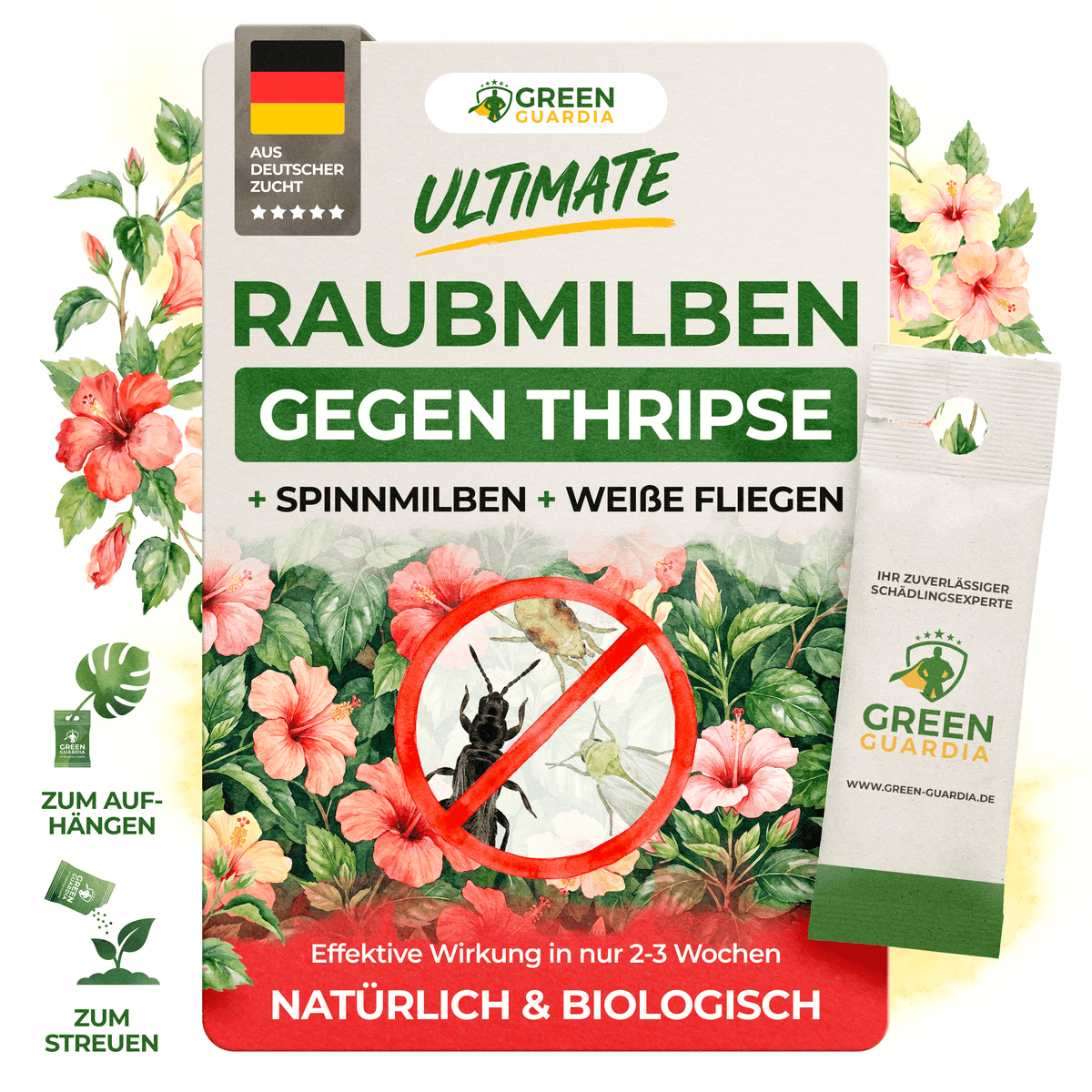
Ultimate predatory mites against thrips, spider mites & whiteflies
-
100% natural help against pest infestations
-
From German breeding – fast delivery
-
Completely chemical-free – no residues
-
Discreet, effective & biologically sustainable
-
Safe for children & pets
Number of bags
In stock - with you in 2-4 business days


What our customers say
-
Efficacy
hardly any effect partially effective highly effective -
Application
complicated some effort child's play -
Delivery quality
poor condition ok top quality
Choose delivery option & save cleverly:


Choose options
-
100% natural help against pest infestations
-
From German breeding – fast delivery
-
Completely chemical-free – no residues
-
Discreet, effective & biologically sustainable
-
Safe for children & pets
Number of bags
In stock - with you in 2-4 business days
Choose delivery option & save cleverly:
-
100% natural help against pest infestations
-
From German breeding – fast delivery
-
Completely chemical-free – no residues
-
Discreet, effective & biologically sustainable
-
Safe for children & pets
Number of bags
In stock - with you in 2-4 business days
Choose delivery option & save cleverly:
GREEN GUARDIA Swirskii Predatory Mites / Against Thrips, Whiteflies and Early-Stage Spider Mites
Amblyseius swirskii are tiny, active predatory mites that hunt for young thrips larvae, whitefly eggs and young larvae, as well as early stages of certain spider mites on leaves and plant surfaces. Available as loose material or in long-release sachets, they are particularly suited for warm conditions indoors, in conservatories and in greenhouses.
Three Pests at Once
Silvery patches and dark spots from thrips, sticky honeydew from whiteflies that briefly flutter up when the plant is moved, plus light speckling and fine webs from spider mites. These pests frequently appear together on houseplants and in greenhouses. All three sit on leaves, flowers or the undersides of leaves, weakening the plant. Anyone who uses a separate product for each pest quickly ends up with a whole cabinet full.
Predatory Mites Against Whiteflies and Thrips in Warm Conditions
Swirskii predatory mites love warmth and are most active between roughly 20 and 30 °C. This makes them a particularly great match for houseplants and ornamental plants, warm greenhouses and conservatories, vegetable and herb plants, and indoor growing. On the balcony, they work well under sufficiently warm and sheltered conditions. Adequate humidity supports the beneficial insects; you should avoid very dry air.
How Swirskii Works on Your Leaves
The predatory mites move across leaves and other plant surfaces, actively searching for prey. In the case of thrips, these are primarily young larvae; in the case of whiteflies, eggs and young larvae on the undersides of leaves; and under suitable conditions, also early stages of certain spider mites. As loose material, you gently distribute them over the leaves and they begin searching immediately. You hang the long-release sachet on a branch deep within the protected plant foliage, where it continuously releases predatory mites over an extended period.
Buying Amblyseius swirskii as Loose Material or Sachets
When pests are visibly present, calculate two units per plant or approximately 3 m²; for general plant care support, use one unit for one plant or approx. 3 m². You can order anywhere from one up to 50 sachets. The Swirskii predatory mites arrive live from German breeding, so apply them as soon as possible after receipt. For an infestation consisting purely of whiteflies, we also offer specialized parasitic wasps such as Encarsia or Eretmocerus.
When Are Swirskii Predatory Mites the Right Choice?
Choose Amblyseius swirskii if multiple pests appear simultaneously on your houseplants, in the conservatory or greenhouse—especially thrips and whiteflies. They are the right choice for warm, sheltered crops and for anyone wanting to tackle multiple problems at once using a single beneficial insect. They work best at 20–30 °C, with sufficient humidity and early on at the first signs.
When Swirskii Predatory Mites Are Not the Right Solution
Their focus is on eggs and early stages; they can barely catch adult whiteflies and fully grown spider mites. In cases of heavy spider mite infestations, specialized predatory mites against spider mites are the better choice. In cool rooms below about 20 °C, these warmth-loving beneficials hardly get going at all. Chemical plant protection products used shortly before or after release will also harm the predatory mites.
🌿 Conclusion: GREEN GUARDIA Ultimate Predatory Mites with Amblyseius swirskii support the biological control of thrips, whiteflies and early-stage spider mites. As loose material or in long-release sachets, they can be easily deployed in warm plant populations.
One beneficial insect, three problems solved. Buy Amblyseius swirskii now!
Raubmilben Swirskii gegen Thripse, Weiße Fliegen & Spinnmilben – natürlich & effektiv
Mit den GREEN GUARDIA Raubmilben Swirskii (Amblyseius swirskii) setzt du auf eine natürliche Unterstützung für deine Pflanzen im Haus, Garten oder Gewächshaus. Die aktiven Nützlinge bewegen sich auf Blättern und Pflanzenoberflächen und ernähren sich von Eiern und jungen Stadien von Thripsen, Weißen Fliegen und Spinnmilben.
Die kleinen Helfer verteilen sich selbstständig auf den Pflanzen und unterstützen ein natürliches Gleichgewicht im Pflanzenbestand – ganz ohne chemische Rückstände.
Dosierungsempfehlung
- Bei sichtbarem Schädlingsauftreten: 2 Einheiten pro Pflanze oder etwa 3 m² Fläche.
- Zur Unterstützung der Pflanzenpflege: 1 Einheit für 1 Pflanze oder ca. 3 m² Fläche.
Anwendung & Tipps: So nutzt du Swirskii-Raubmilben richtig
- Langzeit-Tütchen: Einfach an die Pflanze hängen – die Raubmilben verlassen die Tüte nach und nach, das Tütchen gibt über einen längeren Zeitraum fortlaufend Raubmilben an den Pflanzenbestand ab.
- 1. Direkt aufhängen: Das Tütchen an einem Zweig oder stabilen Blattstiel im geschützten Pflanzeninneren befestigen.
- 2. Nicht zusätzlich öffnen: Die vorgesehene Austrittsöffnung ist bereits vorhanden. Das Tütchen nicht aufreißen oder ausdrücken.
- 3. Geschützt hängen lassen: Vor direkter Sonne, starker Nässe und unmittelbarem Kontakt mit Gießwasser schützen.
- Streuware: Den Beutelinhalt vorsichtig und möglichst gleichmäßig auf Blätter oder auf das Substrat streuen – ideal für größere Flächen oder gezielte Ausbringung. Die Raubmilben können dadurch direkt mit der Suche nach Schädlingen beginnen.
- 1. Tüten öffnen und gleichmäßig ausbringen: Das Trägermaterial vorsichtig auf den Blättern oder in geeigneten Ausbringungshilfen verteilen.
- 2. Pflanzen in Ruhe lassen: Nach der Ausbringung nicht sofort von oben gießen oder das Trägermaterial entfernen.
- Früh einsetzen: Idealerweise bereits bei ersten Anzeichen von Thripsen, Weißen Fliegen oder Spinnmilben.
- Wiederholung möglich: Bei stärkerem Auftreten kann eine weitere Ausbringung nach 1–2 Wochen sinnvoll sein.
- Kombination mit Gelbtafeln: Unterstützt die Beobachtung der Schädlingsaktivität.
- Warme Bedingungen: Temperaturen zwischen etwa 20–30 °C fördern die Aktivität der Swirskii-Raubmilben. Die konkreten Temperaturbereiche der beiliegenden Produktanleitung sind maßgeblich.
- Luftfeuchtigkeit beachten: Eine ausreichende Luftfeuchtigkeit unterstützt die Entwicklung der Nützlinge. Sehr trockene Bedingungen sollten vermieden werden, ohne dabei Staunässe oder dauerhaft nasse Blätter zu verursachen.
- Keine unverträglichen Pflanzenschutzmittel: Vermeide den Einsatz chemischer oder nicht nützlingsverträglicher Pflanzenschutzmittel kurz vor oder nach der Ausbringung, da diese die Swirskii-Raubmilben schädigen können. Bei vorherigen Behandlungen mögliche Wartezeiten sowie die produktspezifischen Anwendungshinweise beachten.
- Lebende Nützlinge: Nach Erhalt möglichst sofort ausbringen. Falls eine kurzfristige Lagerung unvermeidbar ist, ausschließlich die beiliegenden Lagerhinweise befolgen. Nicht einfrieren, keiner direkten Sonne aussetzen und nicht unnötig lange lagern.
Geeignete Einsatzbereiche
- Zimmer- und Zierpflanzen: Für geeignete Pflanzen in Innenräumen
- Gewächshaus und Wintergarten: Besonders passend für warme, geschützte Kulturen
- Gemüse- und Kräuterpflanzen: Biologische Unterstützung für geeignete Nutzpflanzen
- Balkonpflanzen: Bei ausreichend warmen und geschützten Bedingungen
- Indoor-Grow: Für kontrollierte Pflanzenbestände und geeignete Kulturräume
Was sind Thripse, Weiße Fliegen und Spinnmilben?
Thripse, Weiße Fliegen und Spinnmilben gehören zu den häufigsten und hartnäckigsten Pflanzenschädlingen – sowohl im Gewächshaus, auf Balkonpflanzen, Zimmerpflanzen als auch im Garten.
Thripse (Fransenflügler) sind kleine, längliche Insekten, die an Blättern, Blüten und jungen Trieben saugen. Typische Anzeichen sind silbrige Flecken, kleine dunkle Punkte und verformte Blätter. Häufig verstecken sich Thripse in Blüten oder Blattachseln.
Weiße Fliegen sind kleine, weiß geflügelte Insekten, die meist auf der Blattunterseite sitzen. Bei Bewegung der Pflanze fliegen sie kurz auf. Sie hinterlassen häufig klebrigen Honigtau, der die Pflanze zusätzlich belastet und das Wachstum beeinträchtigen kann.
Spinnmilben sind winzige, rötlich-gelbe Milben, die sich bevorzugt an der Blattunterseite aufhalten. Sie verursachen helle Sprenkel, Vergilbung und feine Gespinste, die sich zwischen Trieben und Blättern bilden.
Wie kann ich Thripse, Weiße Fliegen & Spinnmilben natürlich regulieren?
Eine bewährte Methode in der biologischen Pflanzenpflege ist der gezielte Einsatz von Raubmilben wie Amblyseius swirskii, Amblyseius cucumeris oder Phytoseiulus persimilis. Diese natürlichen Gegenspieler bewegen sich aktiv auf den Pflanzen und ernähren sich von Eiern und jungen Stadien verschiedener Pflanzenschädlinge.
🌿 Tipp: Raubmilben entwickeln sich besonders gut bei Temperaturen ab etwa 20 °C und einer mittleren Luftfeuchtigkeit. Ein leichtes Besprühen der Pflanzen kann die Bedingungen zusätzlich verbessern.
Wie kann ich einem Befall vorbeugen?
- Pflanzen regelmäßig kontrollieren: Achte auf silbrige Flecken, klebrige Blätter oder feine Gespinste.
- Luftfeuchtigkeit erhöhen: Besonders in Innenräumen – z. B. durch regelmäßiges Besprühen der Pflanzen.
- Befallene Pflanzenteile entfernen: Frühzeitiges Eingreifen verhindert eine schnelle Ausbreitung.
- Gelbtafeln verwenden: Unterstützen die Beobachtung der Schädlingsaktivität – besonders bei Thripsen und Weißen Fliegen.
- Nützlinge frühzeitig einsetzen: Raubmilben können sowohl vorbeugend als auch bei ersten Anzeichen eingesetzt werden.
⚠️ Hinweis: Vermeide den Einsatz chemischer Pflanzenschutzmittel kurz vor oder nach dem Ausbringen von Nützlingen, da diese auch Raubmilben beeinträchtigen können.

GREEN GUARDIA vs. Other Providers
What sets us apart from the others

|

|

Products for home, garden & pet-related areas |

Unclear product information |

Beneficial insects from German breeding |
Unclear origin information |

Developed for practical use |
Complicated selection |

Clear application instructions |
Few application instructions |

Freshly bottled or carefully packaged |
Longer storage or delivery times possible |

German breeding
Beneficial insects from controlled German breeding – quality you can rely on

Expert advice
Application tips and support from our experts – targeted and effective.

Fast help
Our beneficial insects are ready for immediate use and provide targeted help against acute infestations at home or in the garden.

Natural & safe
Safe for everyday life – use is completely risk-free for children, pets & plants.


Let our customers speak for themselves.

Natural pest control
At GREEN GUARDIA you will find the right natural solution for every pest problem – completely without chemicals.
Whether parasitic wasps against moths, predatory mites against spider mites, or nematodes against fungus gnats and slugs – our beneficial insects provide reliable help at home, in the garden, or in the greenhouse.
As a specialist in biological pest control, we stand for quality, innovation, and sustainable impact – in harmony with nature, humans, and animals.

Expert advice – Personal & Practical
Our expert advisors support you with targeted application tips and years of experience in natural pest control. Whether you have questions about application, combining different beneficial insects, or selecting the right product – we are here to help you quickly and competently.
FAQ Predatory mites
Do you have questions about our products, their application, or shipping? Here you will find the most important answers at a glance. If anything remains unclear, feel free to contact us!

Predatory mites are microscopic, beneficial arachnids that feed on pests such as thrips and spider mites. They actively hunt their prey and help to naturally regulate the pest population – completely without chemicals.
Depending on the area of application, Amblyseius cucumeris is usually used against thrips and Phytoseiulus persimilis against spider mites. Both species specialize in their target pests.
No. Predatory mites are completely harmless to humans, children, and pets. They are tiny, do not sting, and disappear as soon as there is no more prey left.
Ornamental plants, houseplants, and vegetables such as cucumbers, bell peppers, tomatoes, or strawberries are ideal – both indoors and outdoors. They also provide effective help in the greenhouse.
Yes, preventive use is particularly sensible for susceptible plants. The predatory mites establish themselves and intervene immediately when the first pests appear.
Sachets contain food animals and breeding material in which the predatory mites can survive for up to 15 days, allowing them to gradually migrate out independently. Loose material is intended for rapid, immediate use – e.g., in the event of an acute infestation.
We usually ship live beneficial insects Monday through Thursday so that they arrive fresh and vital – delivery generally takes place within 1–3 business days.
The animals arrive in small pouches (sachets) or as loose material in substrate – well-packaged and protected from light. The packaging ensures optimal living conditions during transport.
Release the predatory mites directly upon receipt. If necessary, you can temporarily store them for 1–2 days at 8–10 °C – but apply them as soon as possible.
Live beneficial insects are excluded from exchange. However, we are happy to help you if you encounter any problems.
No, shipping to packing stations is not possible for live beneficial insects. Please provide a home address where you can receive the shipment directly.
Yes, we also ship predatory mites abroad.
Hang sachets directly in the plant or scatter the substrate evenly onto the affected plant parts. Do not expose to direct sunlight and check regularly.
As soon as you spot the first signs of thrips or spider mites. The earlier you react, the more effective the treatment.
In case of an infestation, one sachet or shaker is enough for about 1 plant or 10 m². For prevention, one sachet is sufficient for 2 plants or approx. 20 m².
Depending on the severity of the infestation, a follow-up treatment may be necessary after 1–2 weeks. In many cases, a single application is enough – or preventively every 4–6 weeks.
They remain active as long as they can find pests. Once their food source runs out, they die off or withdraw – completely leaving behind no residues.
They prefer temperatures from approx. 18 °C and high humidity (60–80 %). If the air from central heating is very dry, we recommend spraying the plants regularly.
Along with the predatory mites, the bags also contain prey animals, so the mites often have enough food and do not leave the sachet immediately. This is completely normal and not a sign that they are not active.
Our predatory mites can survive in the bags for up to 15 days – even at freezing temperatures.
The sachets already come with small holes through which the predatory mites can easily escape. Simply hang the sachets on the affected plants or near the infested areas. The predatory mites will make their own way and find their target automatically.
Yes, in mild weather (above 15 °C) you can also use them outdoors – e.g. in flower beds, on balcony plants, or in raised beds.
Thrips are elongated, fast-moving insects that cause silvery feeding marks. Spider mites spin fine webs, often on the undersides of leaves – yellow spots are a typical symptom.
No. Synthetic plant protection products and many oils are harmful to predatory mites. Avoid using such products for 2 weeks before and 4 weeks after application.


