






Number of cards


Lacewing eggs against aphids and mealybugs
-
100% natural help against aphids & co.
-
Bred in Germany – fast delivery
-
Completely chemical-free – no residue
-
Discreet, effective & biologically sustainable
-
Safe for children & pets
Number of cards
In stock - arrives in 2-4 business days


What our customers say
-
Efficacy
not effective highly effective -
Application
complicated child's play -
Tolerability
concerning very safe
Choose delivery option & save cleverly:


Choose options
-
100% natural help against aphids & co.
-
Bred in Germany – fast delivery
-
Completely chemical-free – no residue
-
Discreet, effective & biologically sustainable
-
Safe for children & pets
Number of cards
In stock - arrives in 2-4 business days
Choose delivery option & save cleverly:
-
100% natural help against aphids & co.
-
Bred in Germany – fast delivery
-
Completely chemical-free – no residue
-
Discreet, effective & biologically sustainable
-
Safe for children & pets
Number of cards
In stock - arrives in 2-4 business days
Choose delivery option & save cleverly:
GREEN GUARDIA lacewing eggs – Biological pest control for hanging
Lacewing eggs on carrier cards are ready-to-use cards containing over 50 lacewing eggs that you can hang directly on infested plants or place on the substrate. Following staggered hatching, the young lacewing larvae independently search out aphids, mealybugs and other small, soft-bodied pests, completely without chemicals.
Sticky shoots full of aphids and mealybugs
Suddenly the shoots develop a sticky shine, and the tips are packed densely with aphids. Aphids multiply rapidly and can transmit plant viruses. Mealybugs prefer to hide in leaf axils, where you often only discover them late. Both suck plant sap, leave behind sticky honeydew and stunt growth. By the time you really notice the infestation, the next generation is usually already on the way.
Beneficial insects against mealybugs on houseplants, balcony and greenhouse plants
Whether a houseplant on the windowsill, herbs in a balcony box or container plants on the patio, these are precisely the places where you do not want to spray chemicals. Lacewing larvae are beneficial insects against mealybugs and aphids on houseplants and ornamental plants, on balconies and patios, in raised beds, in the garden and in greenhouses. Even sensitive crops like herbs tolerate their use. One card is sufficient for about 2 m² of plant area; for a single plant or a balcony box, one is often already enough.
Beneficial insects against aphids with staggered hatching
Each carrier card holds over 50 eggs in various stages of development. Therefore, the larvae do not hatch all at once, but rather gradually. You don't need to open or activate anything; simply hang the card between the leaves or place it on the substrate. The freshly hatched larvae are barely visible at about 1–2 mm, leave the card and set off independently in search of prey. Alongside aphids and mealybugs, thrips, spider mites and whiteflies are also on their menu. You will recognize success less by the larvae themselves and more by the fact that the infestation is receding step by step.
Buy lacewing eggs as eggs against aphids on cards
The eggs feel most comfortable at 20–26 °C. You can order from one up to 50 cards, depending on the area and infestation. Leave each card on the plant for at least two weeks so that the late-hatchers can also emerge, and for heavy or recurring infestations, plan a follow-up application after 2–3 weeks. The eggs originate from German breeding and are shipped as live goods. For larger areas such as flower beds or entire groups of plants, our assortment also features green lacewing eggs loose in a tube.
When are lacewing eggs the right choice?
Lacewing eggs on carrier cards are suitable when aphids or mealybugs are present on individual house, balcony or greenhouse plants and you are looking for a solution without opening, scattering or measuring. They are the right choice for smaller plant areas of about 2 m² per card and for anyone keeping an eye on multiple soft-bodied pests at once. They work well at 20–26 °C in a sheltered spot without strong direct sunlight.
When lacewing eggs are not the right remedy
Anyone expecting an aphid-free result overnight will need some patience, because the larvae only hatch after a few days; at around 15 °C this takes 5–7 days. Many ants on the plant protect the aphids and disturb the lacewing larvae, so keep ants away beforehand. Incompatible plant protection products have no place on the plant for at least 6 weeks before and during application. The eggs also tolerate blazing sun directly on the card poorly.
🌿 Conclusion: GREEN GUARDIA lacewing eggs on carrier cards are a simple, natural aid against aphids, mealybugs and other soft-bodied pests. Hang up the card, wait for hatching and let the young larvae work directly on the plant, completely without chemical residues.
Card in, aphids out. Order lacewing eggs now!
Anwendung der GREEN GUARDIA Florfliegenlarven-Karten
Die Florfliegenlarven-Karten von GREEN GUARDIA sind einfach in der Anwendung und sowohl für private Haushalte als auch für den professionellen Einsatz geeignet. Jede Karte enthält über 50 Florfliegeneier in verschiedenen Entwicklungsstadien – bereit zur natürlichen Bekämpfung von Blattläusen, Wollläusen, Thripsen und Spinnmilben.
Innerhalb weniger Tage schlüpfen die ersten Larven und beginnen sofort mit der Schädlingsjagd. Die erwachsenen Tiere setzen anschließend den natürlichen Fortpflanzungszyklus fort, indem sie erneut Eier ablegen. Eine Karte reicht für etwa 2 m² Pflanzenfläche und ist damit ideal für Zimmerpflanzen, Balkonkästen, Hochbeete oder Gewächshäuser.
Anwendung & Tipps: So nutzt du Florfliegeneier richtig
- Karten platzieren: Direkt nach Erhalt gleichmäßig im Pflanzenbereich verteilen – zwischen den Blättern, am Stängel oder im Topf, nicht in die Triebspitzen. Möglichst geschützt und ohne starke direkte Sonneneinstrahlung.
- Temperatur beachten: Optimal bei 20–26 °C. Der Schlupf der Larven erfolgt temperaturabhängig: bei ca. 15 °C nach etwa 5–7 Tagen, bei ca. 20 °C bereits nach 2–3 Tagen.
- Schlupf: Die Florfliegeneier entwickeln sich direkt am Einsatzort weiter. Nach dem Schlupf verlassen die jungen Larven die Trägerkarte und beginnen selbstständig mit der Nahrungssuche.
- Wirkdauer: Die Karten mindestens 2 Wochen in der Pflanze lassen, damit auch später schlüpfende Florfliegenlarven ausreichend Zeit haben, die Karte zu verlassen.
- Keine Chemie: Mindestens 6 Wochen vor und während der Anwendung keine unverträglichen oder synthetischen Pflanzenschutzmittel verwenden.
- Ameisen entfernen: Ameisen können Schädlinge wie Blattläuse schützen und dadurch die Arbeit der Florfliegenlarven beeinträchtigen.
- Erfolgskontrolle: Die geschlüpften Larven sind anfangs sehr klein (ca. 1–2 mm) und können leicht übersehen werden. Der Anwendungserfolg zeigt sich vor allem durch einen zunehmenden Rückgang des Schädlingsbefalls.
🌿 Tipp: Für beste Ergebnisse bei starkem oder wiederkehrendem Befall empfehlen wir eine Folgeanwendung im Abstand von 2–3 Wochen.
Geeignete Einsatzbereiche
- Zimmer- & Zierpflanzen: Natürlicher Schutz im Innenbereich
- Balkon & Terrasse: Gegen kleine, weichhäutige Schädlinge auf Kübel- und Topfpflanzen
- Garten & Gewächshaus: Natürliche Schädlingskontrolle an unterschiedlichen Pflanzen
- Empfindliche Kulturen: Auch für Kräuter und andere empfindliche Pflanzen geeignet
Blattläuse, Wollläuse, Thripse & Spinnmilben natürlich bekämpfen – mit GREEN GUARDIA Florfliegenlarven
Blattläuse, Wollläuse, Thripse und Spinnmilben zählen zu den häufigsten und lästigsten Pflanzenschädlingen im Garten, Gewächshaus oder an Zimmerpflanzen. Sie saugen Pflanzensäfte, schwächen das Wachstum und übertragen häufig Krankheiten.
Mit GREEN GUARDIA Florfliegen bekämpfst du diese Schädlinge gezielt und effektiv – 100 % natürlich, rückstandsfrei und ohne Chemie.
Was macht diese Schädlinge so gefährlich?
- Blattläuse: Vermehren sich rasant und übertragen Pflanzenviren.
- Wollläuse: Verstecken sich in Blattansätzen und hinterlassen klebrigen Honigtau.
- Thripse: Saugen an Blättern und Knospen – oft sichtbar durch silbrige Flecken.
- Spinnmilben: Bilden feine Gespinste und verursachen Blattverfärbungen und Blattabwurf.
So beugst du einem Befall vor
- Regelmäßig kontrollieren: Blätter, Blattunterseiten und Triebe frühzeitig prüfen.
- Pflanzen stärken: Gesunde Pflanzen sind weniger anfällig – achte auf Nährstoffe und Bodenqualität.
- Luftzirkulation verbessern: Besonders wichtig in Innenräumen und Gewächshäusern.
- Biologische Nützlinge einsetzen: Florfliegenlarven und Raubmilben ergänzen sich ideal.
🌱 Tipp: Die beste Wirkung erzielst du bei Temperaturen ab 12 °C. Bei starkem Befall empfiehlt sich die Kombination mit Florfliegenlarven oder Raubmilben für maximale Ergebnisse.

GREEN GUARDIA vs. Other providers
What sets us apart from the rest

|

|

Products for home, garden & pet-related areas |

Unclear product information |

Beneficial insects from German breeding |
Unclear origin information |

Developed for practical use |
Complicated selection |

Clear application instructions |
Few application instructions |

Freshly bottled or carefully packaged |
Longer storage or delivery times possible |

Bred in Germany
Beneficial insects from controlled German breeding – quality you can rely on

Expert advice
Application tips and support from our experts – targeted and effective.

Fast help
Our beneficial insects are ready for immediate use and help target acute infestations in the house or garden.

Natural & safe
Harmless for everyday use – use is completely risk-free for children, pets & plants.


We let our customers speak.

Natural pest control
At GREEN GUARDIA you will find the perfect natural solution for every pest problem – completely chemical-free.
Whether it's lacewings against aphids, predatory mites against spider mites, or nematodes against fungus gnats and slugs – our beneficial insects provide reliable help in the house, garden, or greenhouse.
As a specialist in biological pest control, we stand for quality, innovation, and sustainable impact – in harmony with nature, people, and animals.

Expert advice – Personal & Practical
Our expert advisors support you with targeted application tips and many years of experience in natural pest control. Whether you have questions about application, combining different beneficial insects, or selecting the right product – we are here to help you quickly and competently.
FAQ Lacewings
Do you have questions about our products, application, or shipping? Here you can find the most important answers at a glance. If anything remains unclear, please feel free to get in touch with us!
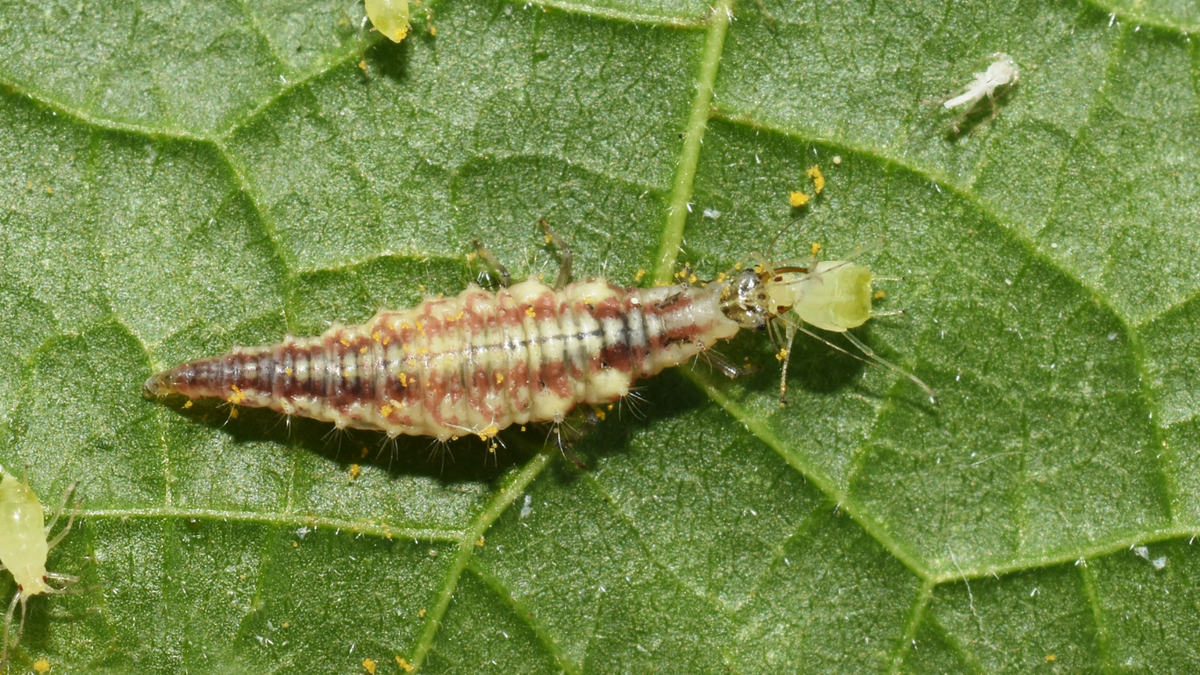
Lacewing larvae, also known as "aphid lions," are natural predators of aphids, mealybugs, thrips, and other pests. They feed exclusively on these pests and reduce the infestation naturally.
The cards each contain over 50 lacewing eggs in various stages of development. The larvae hatch after a few days and immediately start searching for pests.
Yes, lacewing larvae are completely harmless to humans, pets, and plants. They leave no residue and disappear once their work is done.
Lacewing larvae are suitable for the natural control of aphids, mealybugs, scale insects, thrips, and spider mites.
The hatched larvae are only 1–2 mm in size and often hide on the undersides of leaves. Their activity is usually only visible through the decline of the pests.
Depending on temperature and humidity, the larvae hatch within 1 to 5 days and remain active for about 2–4 weeks.
You will receive carrier cards with lacewing eggs that can be hung or placed directly on the plant.
No – they contain eggs in various stages of development. The larvae will hatch in the following days.
Best at the first signs of a pest infestation – this allows the beneficial insects to intervene early.
Ideally, apply them immediately. Short-term storage for 1–2 days at 8–12°C is possible.
Shipping information:
- Fresh shipping: Orders from Monday to Friday at 05:00 AM are shipped fresh daily.
- Weekend orders: Orders placed after Friday at 5 AM will be shipped the following Monday to ensure the freshest beneficial insects.
One card is sufficient for up to 2 m² of plant area. Use multiple cards for heavier infestations or larger areas.
Immediately after receipt, hang the cards evenly on infested plants or place them on the substrate – as close to the leaves as possible.
At 15°C after approx. 5–7 days, at 20°C already after 2–3 days.
Leave them hanging for at least two weeks so that all larvae can hatch and become active.
In case of a severe or recurring infestation, a second application after 2–3 weeks is recommended.
Yes – e.g., on the balcony, terrace, or in the garden. Direct sunlight and heavy rain should, however, be avoided.
No – the cards are ready to use. Simply place them, and hatching occurs automatically.
The freshly hatched larvae are barely visible to the naked eye. They begin hunting pests immediately after hatching and only become more clearly visible later.
As early as 5–10 days, depending on temperature, plant type, and pest density.
Yes – ideal for indoor spaces, winter gardens, or greenhouses.
Yes – lacewings can be combined well with parasitic wasps or predatory mites.
The larvae eat pests, later pupate, or disappear on their own – completely without residue.
Yes – they are usually made of biodegradable material and can be disposed of in organic waste.


