







Number of beneficial insects and m²


SF nematodes against flea beetles
-
100% natural help against flea beetles
-
From German breeding – delivered quickly
-
Completely chemical-free – no residue
-
Discreet, effective & biologically sustainable
-
Harmless to children & pets
Number of beneficial insects and m²
In stock - with you in 2-4 business days


What our customers say
-
Efficacy
hardly any effect partially effective highly effective -
Application
complicated some effort child's play -
Delivery Quality
not vital usable fresh & active
Choose delivery option & save cleverly:


Choose options
-
100% natural help against flea beetles
-
From German breeding – delivered quickly
-
Completely chemical-free – no residue
-
Discreet, effective & biologically sustainable
-
Harmless to children & pets
Number of beneficial insects and m²
In stock - with you in 2-4 business days
Choose delivery option & save cleverly:
-
100% natural help against flea beetles
-
From German breeding – delivered quickly
-
Completely chemical-free – no residue
-
Discreet, effective & biologically sustainable
-
Harmless to children & pets
Number of beneficial insects and m²
In stock - with you in 2-4 business days
Choose delivery option & save cleverly:
GREEN GUARDIA Nematodes against flea beetles
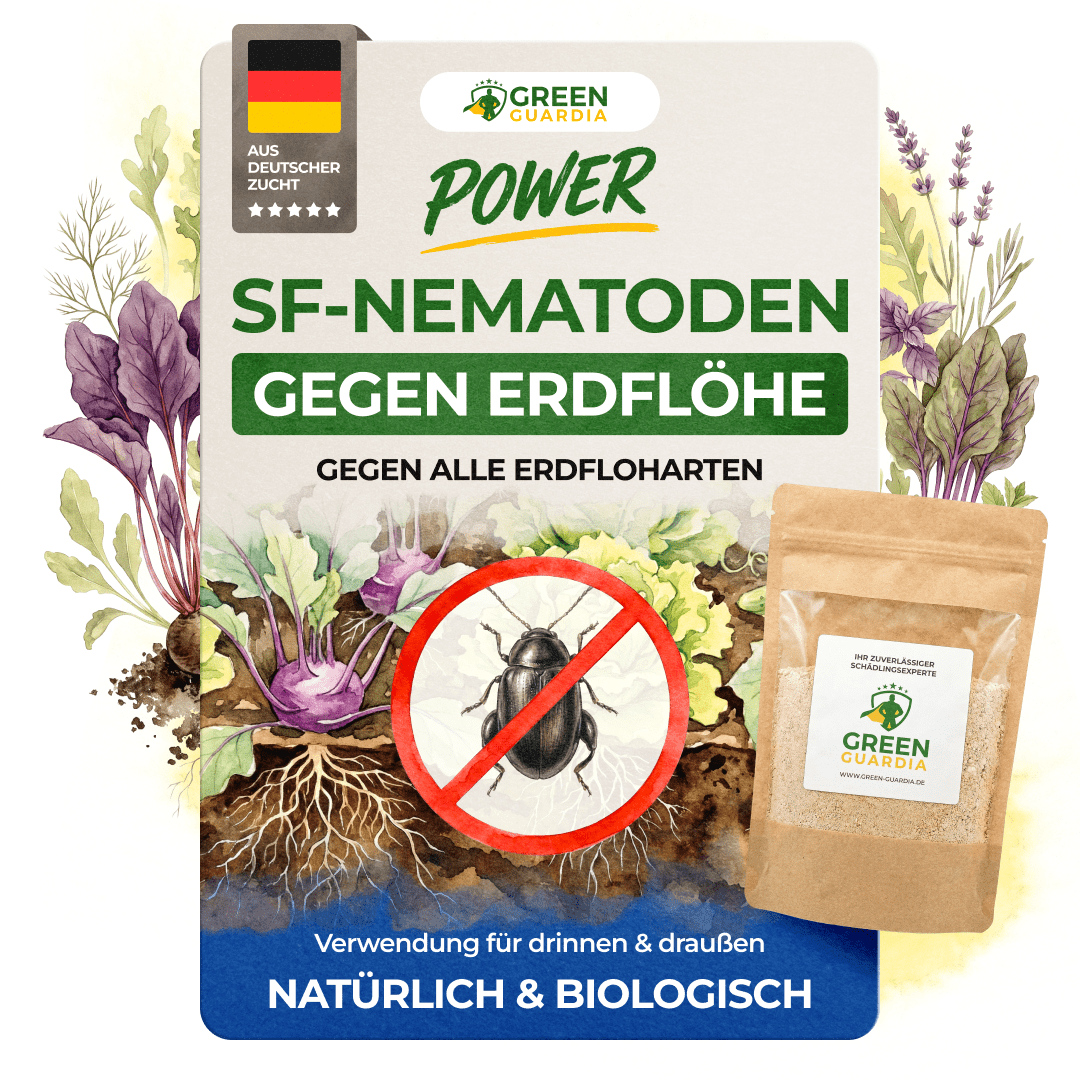
SF nematodes against flea beetles are microscopic roundworms of the species Steinernema feltiae that are applied to the soil via irrigation water. Once in the soil, they penetrate the flea beetle larvae and stop their development. They are a biological alternative to chemical pesticides and are harmless to humans, pets, and beneficial insects.
Combating flea beetles: holes in leaves are only half the story
Flea beetles are small, shiny beetles that jump away at the slightest touch. They eat holes into the leaves of radishes, arugula, cabbage, and other cruciferous vegetables. For young plants and fresh seedlings, this is often enough to destroy a large portion of the crop. What many people don't know: the beetles lay their eggs in the soil, and the larvae continue to live there. This is where our nematodes come in, targeting the pests at the root.
SF flea beetle nematodes for garden beds, raised beds, containers, and greenhouses
Wherever you grow radishes, arugula, or types of cabbage, treating the soil is worthwhile. Whether in vegetable patches, raised beds, greenhouses, or balcony planters: simply add the SF nematodes for flea beetles to water and pour it carefully onto the soil. It is important that they reach the roots directly and do not land on the leaves.
How SF nematodes against flea beetles work in the soil
Steinernema feltiae lives in the soil and actively searches for prey there. SF nematodes against flea beetles penetrate the larvae and stop their development, preventing the next generation of beetles. Nothing is left on the leaves. The nematodes only move in moist soil, which must remain consistently damp before application and for at least 14 days afterward. They are harmless to humans, pets, and other beneficial insects.
Which nematodes for which pest – and how much you need
The dosage is calculated based on your planting area. One pack contains 2 million SF nematodes, which is enough for 4 square meters and about 20 plants. For 100 square meters, you would choose 25 packs, for example. The correct species is more important than anything else. SF nematodes against flea beetles are the same species used for fungus gnats and ants: Steinernema feltiae, targeted at larvae in the soil. For vine weevils and grubs, use HB nematodes; for slugs, use the PC variant. The abbreviation before the name determines the target pest. This is a live product, so it is best to apply it immediately upon receipt.
When are SF nematodes against flea beetles the right choice?
Choose them if you see shot-hole damage on radishes, arugula, or cabbage and want to use biological methods, especially for vegetables you harvest directly. They are the right choice for soil temperatures between 10 and 28 °C and anywhere you can keep the soil consistently moist for 14 days. And they are the right choice if the infestation returns every year: use them preventively instead of just reacting every spring.
When nematodes alone are not enough
They won't catch the jumping beetles on the leaves. The roundworms work in the soil and on the larvae; the acute feeding damage above ground won't stop immediately—for that, mechanical protection like a pest control net helps as well. At soil temperatures below 10 °C, not enough happens, and the same applies above 28 °C. If the soil dries out in the first 14 days, the application will be in vain, as the nematodes cannot move without moisture. Pesticides applied before or after use will impair their effectiveness. And in cases of severe infestation, one treatment is not enough: a second application is required after seven to 14 days.
🌿 Conclusion: With GREEN GUARDIA SF nematodes, you target flea beetles where they come from – in the soil, residue-free and safe for plants, humans, and the environment.
Start at the bottom so there is peace at the top: Order SF nematodes now!
Erdflöhe natürlich bekämpfen – mit GREEN GUARDIA Nematoden
Wie viele Nematoden benötige ich?
Mit GREEN GUARDIA Nematoden bekämpfst du Erdflöhe gezielt im Boden – egal ob im Gemüsebeet, im Hochbeet oder im Gewächshaus. Die Tabelle zeigt dir die passende Packungsgröße je nach Fläche, Anzahl der Pflanzen und Wasserbedarf. 2 Millionen Nematoden reichen für rund 4 m², etwa 20 Pflanzen und benötigen 2 Liter Wasser.
| Packungsgröße | Fläche | Anzahl Pflanzen | Wassermenge |
|---|---|---|---|
| 2 Mio. | 4 m² | 20 | 2 l |
| 3 Mio. | 6 m² | 30 | 3 l |
| 4 Mio. | 8 m² | 40 | 4 l |
| 5 Mio. | 10 m² | 50 | 5 l |
| 6 Mio. | 12 m² | 60 | 6 l |
| 10 Mio. | 20 m² | 100 | 10 l |
| 15 Mio. | 30 m² | 150 | 15 l |
| 20 Mio. | 40 m² | 200 | 20 l |
| 25 Mio. | 50 m² | 250 | 25 l |
| 50 Mio. | 100 m² | 500 | 50 l |
Anwendung & Tipps: So nutzt du die SF-Nematoden richtig
- Anmischen: Nematodenpulver vollständig in der passenden Wassermenge auflösen.
- Ausbringen: Die Lösung gleichmäßig auf die befallene Erde und die betroffenen Pflanzflächen gießen.
- Feucht halten: Den Boden vor der Anwendung und mindestens 14 Tage danach gleichmäßig feucht halten – wichtig für die Aktivität der Nematoden.
- Temperatur: Optimal bei Bodentemperaturen zwischen 10 und 28 °C.
- Wiederholung: Bei starkem Befall nach 7 bis 14 Tagen erneut anwenden.
- Keine Chemie: Pflanzenschutzmittel vermeiden, da sie die Wirkung der Nematoden beeinträchtigen können.
Geeignete Einsatzbereiche
- Gemüsebeete: Besonders wirksam bei Radieschen, Rucola, Kohlarten und anderen Kreuzblütlern.
- Hoch- & Frühbeete: Ideal für gezielte Anwendungen auf kleiner Fläche – sicher für essbare Pflanzen, auch bei direktem Verzehr.
- Gewächshäuser: Optimal bei gleichmäßiger Bodenfeuchte.
- Balkonkästen & Kübel: Auch in Topfkulturen und urbanen Gärten effektiv, besonders bei warmem Wetter.
- Gartenboden: Zur Bekämpfung bei sichtbarem Fraß oder vorbeugend bei wiederkehrendem Befall.
- Jungpflanzen & Anzucht: Unterstützt eine gesunde Bodenhygiene nach dem Auspflanzen.
- Biogärten: Rückstandsfrei und schonend.
🌱 Gut zu wissen: GREEN GUARDIA Nematoden bekämpfen Erdflöhe gezielt im Boden – umweltfreundlich, bienenverträglich und sicher für Mensch und Haustier.
Was sind Erdflohkäfer (Erdflöhe)?
Erdflöhe sind winzige, sprungkräftige Käfer aus der Familie der Blattkäfer. Sie treten vor allem im Frühling und Sommer in Gemüsebeeten, Hochbeeten und an Jungpflanzen auf. Besonders betroffen sind Kohlarten, Radieschen, Rucola und andere Kreuzblütler.
Die Käfer verursachen typischen Schabefraß mit kleinen Löchern in den Blättern. Dadurch wird das Pflanzenwachstum gehemmt und die Pflanzen geschwächt. Bei starkem Befall können insbesondere junge Pflanzen und Keimlinge vollständig eingehen.
Wie kann ich einem Befall mit Erdflöhen vorbeugen?
- Feuchtigkeit erhöhen: Erdflöhe meiden feuchte Böden – regelmäßiges Gießen und Mulchen wirkt vorbeugend.
- Dicht bepflanzen: Schattige, gut bewachsene Beete sind für Erdflöhe weniger attraktiv als sonnige, trockene Flächen.
- Gemüseschutznetze nutzen: Kulturschutznetze verhindern, dass die Käfer die Pflanzen erreichen.
- GREEN GUARDIA Nematoden einsetzen: Biologische Nematoden (z. B. Steinernema carpocapsae) bekämpfen die im Boden lebenden Larven gezielt – ganz ohne Chemie.
- Boden lockern: Regelmäßiges Hacken stört die Entwicklung der Larven im Boden.
- Unkraut entfernen: Viele Wildpflanzen dienen als Wirt – saubere Beete reduzieren das Risiko.
🌿 Tipp: Eine frühzeitige Behandlung mit Nematoden gegen Erdflöhe schützt junge Pflanzen zuverlässig vor Folgeschäden und ermöglicht eine gesunde, rückstandsfreie Ernte.

GREEN GUARDIA vs. Other providers
What sets us apart from the others

|

|

Products for home, garden & pet-related areas |

Unclear product information |

Beneficial insects from German breeding |
Unclear origin information |

Developed for practical use |
Complicated selection |

Clear application instructions |
Few application instructions |

Freshly bottled or carefully packaged |
Longer storage or delivery times possible |

German Breeding
Beneficial insects from controlled German breeding – quality you can rely on

Expert Advice
Application tips and support from our experts – targeted and effective.

Fast Help
Our beneficial insects are ready for immediate use and provide targeted help for acute infestations at home or in the garden.

Natural & Safe
Harmless in everyday life – use is completely risk-free for children, pets & plants.


We let our customers speak.

Natural pest control
At GREEN GUARDIA you will find the right natural solution for every pest problem – completely without chemicals.
Whether parasitic wasps against moths, predatory mites against spider mites, or nematodes against fungus gnats and slugs – our beneficial insects provide reliable help in the house, garden, or greenhouse.
As a specialist in biological pest control, we stand for quality, innovation, and a sustainable impact – in harmony with nature, people, and animals.

Expert Advice – Personal & Practical
Our expert advisors support you with targeted application tips and years of experience in natural pest control. Whether you have questions about application, combining different beneficial insects, or selecting the right product – we will help you quickly and competently.
FAQ Nematodes
Do you have questions about our products, their application, or shipping? Here you will find the most important answers at a glance. Should anything remain unclear, please feel free to contact us!
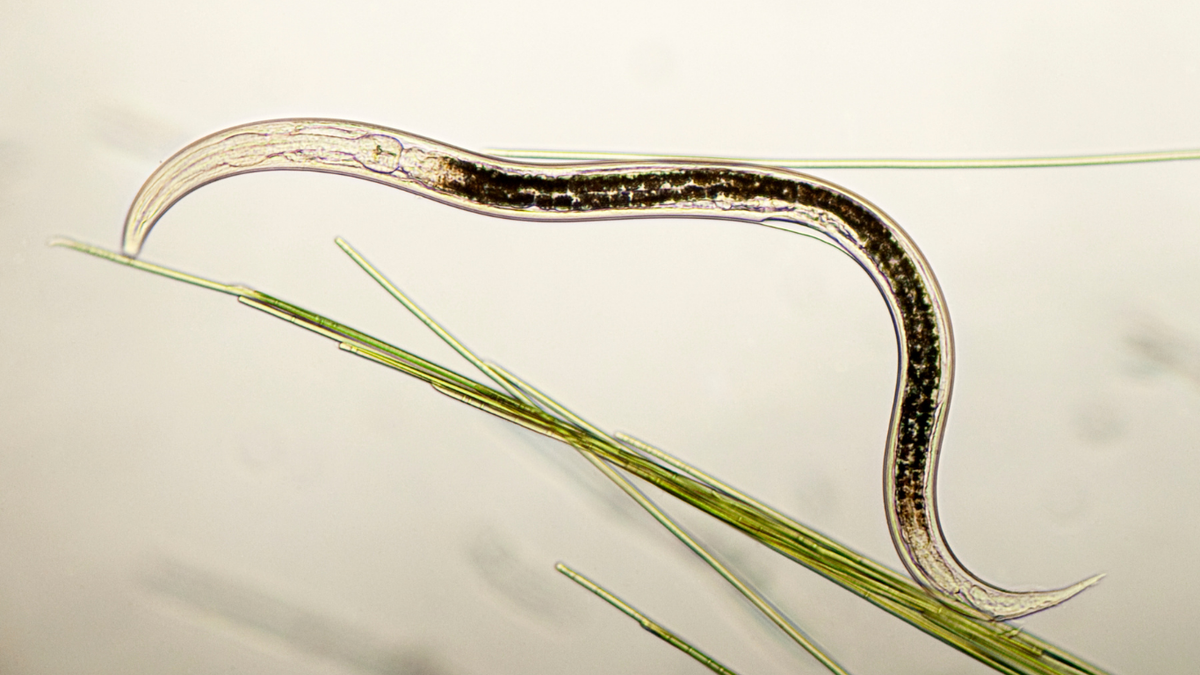
Nematodes are microscopic roundworms that specifically combat soil-dwelling pests such as fungus gnat larvae, vine weevils, or chafer grubs biologically.
Depending on the species, nematodes combat fungus gnat larvae, black vine weevils, white grubs, mole crickets, garden chafer larvae, ants, flea beetles, slugs and snails, or crane fly larvae, among others.
No, nematodes are completely harmless to humans, pets, and plants. They are specialized in specific pests and cause no damage.
The nematodes actively penetrate the pest larvae and release bacteria that kill the pest. Afterwards, the nematodes multiply inside the dead larva.
As a rule, the first effects become visible after about 5–7 days. Complete control takes up to 3 weeks, depending on the pest and the severity of the infestation.
Yes, nematodes can be applied regularly in vulnerable areas to prevent pests – especially in the case of recurring problems with fungus gnats or white grubs.
Nematodes prove to be much more robust against heat than often assumed. Thanks to the secure shipping packaging, our SF nematodes can easily survive uncooled transport during the summer months for up to a week without any problems. Therefore, we rely on eco-friendly delivery without cooling pads and unnecessary packaging waste.
The nematodes are delivered directly to your mailbox in an envelope. Even for orders containing other products, we ship our nematodes in a separate envelope. This ensures fast and secure delivery. For this reason, the nematodes unfortunately cannot be delivered to packing stations.
Yes, ideally nematodes should be applied directly upon receipt. Storage in the refrigerator at 4–8 °C is possible for a few days (see packaging).
Our nematodes are enriched with a biological substrate that sometimes changes its shape during transport and due to temperature fluctuations. This can make it look mushy or clumped, but it is completely normal and fully functional.
When you add the product to water and stir well, you will notice that everything dissolves nicely and can be applied without any problems.
Live beneficial organisms are excluded from exchange. However, we are happy to help you if you encounter any problems.
Shipping information
- Fresh shipping: Orders placed from Monday to Friday by 05:00 AM are shipped fresh daily.
- Weekend orders: Orders placed after Friday 5 AM will be shipped the following Monday to guarantee the freshest beneficial organisms.
The nematodes are mixed with water and applied to the infested areas using a watering can or a spraying system. The soil should be well moistened beforehand.
One application is usually sufficient. In case of heavy infestation or re-emergence, a second application can be carried out after approx. 2 weeks.
Nematodes require soil temperatures between 12–25 °C and a uniformly moist environment – at least for several hours after application.
Nematodes are suitable for use in flower pots, flower beds, on lawns, and in greenhouses – both indoors and outdoors.
After combating their host larvae, the nematodes slowly die off if no new pests are present.
Yes, nematodes can be combined with other beneficial organisms such as predatory mites or parasitic wasps, as long as their habitats do not overlap.
Please contact us directly with a photo of the delivery and your order number.
Yes, instructions are included with every shipment, or you can download them digitally from our website.
Yes, our nematodes can also be used for pest infestations on crops such as vegetables. They are completely harmless to humans and pose no health risk even if ingested accidentally.
No, our nematodes cannot be overdosed. They combat pests until no hosts are left and then die off by themselves. The exact application amounts can be found in our digital instructions.
Yes, nematodes are a recognized means of biological pest control and are suitable for organic farming.
The clay powder or gel is harmless and can simply be spread in the garden or disposed of in household waste.


