







Number of beneficial insects and m²


Nematodes against fig tree skeletonizer moth
-
100% natural help against fig leaf roller
-
From German breeding – fast delivery
-
Completely chemical-free – no residue
-
Discreet, effective & biologically sustainable
-
Safe for children & pets
Number of beneficial insects and m²
In stock - with you in 2-4 business days


What our customers say
-
Efficacy
hardly any effect partially effective highly effective -
Application
complicated some effort child's play -
Delivery Quality
not vital usable fresh & active
Choose delivery option & save cleverly:


Choose options
-
100% natural help against fig leaf roller
-
From German breeding – fast delivery
-
Completely chemical-free – no residue
-
Discreet, effective & biologically sustainable
-
Safe for children & pets
Number of beneficial insects and m²
In stock - with you in 2-4 business days
Choose delivery option & save cleverly:
-
100% natural help against fig leaf roller
-
From German breeding – fast delivery
-
Completely chemical-free – no residue
-
Discreet, effective & biologically sustainable
-
Safe for children & pets
Number of beneficial insects and m²
In stock - with you in 2-4 business days
Choose delivery option & save cleverly:
Nematodes against fig leaf skeletonizer
Nematodes against fig leaf skeletonizer are microscopic roundworms that are sprayed onto infested fig trees with water. They specifically seek out the moth's caterpillars and naturally interrupt their further development. A true biological alternative to chemical insecticides for figs in gardens and containers.
Pests discovered on your fig tree?
The fig is considered a robust plant, yet suddenly webbed leaves with feeding damage and nibbled young shoots appear. A potential culprit is the fig leaf skeletonizer, a small moth that many gardeners are not familiar with. Its caterpillars feed on leaves and young shoots. If the feeding recurs, the tree is weakened and grows poorly.
Fig moth in the garden, in containers and on the patio
The moth, sometimes also called the fig moth, is found wherever figs grow. Affected are planted fig trees in the garden as well as figs in containers on balconies and patios, but also fig crops in orchards and green spaces. Because the caterpillars sit protected between the webbed leaves, an infestation is often only noticed when a significant amount has already been eaten. Young caterpillars are best treated biologically, which is why regular inspection of leaves and young shoots is worthwhile.
Biological help directly on the fig tree
The process is very simple. You dissolve the nematodes in water and spray the solution evenly onto the infested fig tree. The nematodes specifically seek out the caterpillars, penetrate them after contact, and interrupt their further development. It works best to apply them during early caterpillar stages, from about 12 °C and in the evening hours or during humid weather. Keep the plant as moist as possible afterwards and protect it from direct sunlight.
Buy nematodes against fig leaf skeletonizer online
Package sizes range from 5 million nematodes for 10 m² up to 250 million for 500 m², from container trees to fig crops in orchards. As live goods from German breeding, they are delivered to you with shipping instructions for hot and cold days. And because we structure our product range by target pest, these nematodes are precisely tailored for use on the fig tree.
When are nematodes the right choice?
Choose nematodes if you discover webbed, damaged leaves or young caterpillars on your fig tree in the garden or container and want to proceed without chemical insecticides. They are the right choice if you act early in the caterpillar stage. Ideal temperatures are from about 12 °C and application in the evening or during humid weather.
When nematodes are not the right remedy
Leaves and shoots that have already been eaten will not grow back through the treatment; the nematodes target the caterpillars that are still active. Older caterpillars are harder to treat biologically than young ones. It is best to additionally remove heavily infested shoots. After spraying, the nematodes do not tolerate glaring sun or dryness.
🌱 Conclusion: GREEN GUARDIA nematodes are a biological solution against the caterpillars of the fig leaf skeletonizer on fig trees in gardens, containers, and green spaces. Applied early, they support natural regulation completely without chemical insecticides.
Buy nematodes against fig leaf skeletonizer now!
Feigen-Spreizflügelfalter natürlich reduzieren – mit GREEN GUARDIA Nematoden
Die Raupen des Feigen-Spreizflügelfalters können Blätter und junge Triebe von Feigenbäumen schädigen. GREEN GUARDIA Nematoden sind mikroskopisch kleine Nützlinge, die die Raupen gezielt aufsuchen. Nach dem Kontakt dringen sie in die Raupen ein und unterbrechen deren weitere Entwicklung auf natürliche Weise – biologisch und ohne chemische Insektizide.
Die Nematoden werden einfach mit Wasser ausgebracht und auf die befallenen Feigenbäume gesprüht. Dort entfalten sie ihre natürliche Wirkung und eignen sich besonders für den biologischen Pflanzenschutz an Feigenbäumen.
Wie viele Nematoden benötige ich?
Wähle die passende Packungsgröße für deine Behandlungsfläche und mische sie mit der empfohlenen Wassermenge:
Anwendung & Tipps: So nutzt du Nematoden richtig
- 1. Anmischen: Nematoden gemäß Anleitung vollständig in der empfohlenen Wassermenge auflösen.
- 2. Ausbringen: Die Lösung gleichmäßig auf befallene Feigenbäume und Raupen sprühen.
- 3. Nachsorge: Die Anwendung möglichst in den Abendstunden oder bei feuchter Witterung durchführen, damit die Nematoden optimale Bedingungen vorfinden.
- Temperatur: Anwendung bei geeigneten Witterungsbedingungen und möglichst ab etwa 12 °C durchführen.
- Feuchtigkeit: Die behandelten Pflanzen möglichst feucht halten und direkte Sonneneinstrahlung nach der Anwendung vermeiden.
- Zeitpunkt: Für optimale Ergebnisse frühzeitig bei jungen Raupenstadien sowie bevorzugt in den Abendstunden anwenden.
- Keine ungeeigneten Pflanzenschutzmittel: Auf gleichzeitig eingesetzte Mittel achten, die die Nützlinge beeinträchtigen könnten.
Geeignete Einsatzbereiche
- Feigenbäume im Garten: Zur biologischen Anwendung bei Befall durch den Feigen-Spreizflügelfalter, für befallene Bäume im Privatgarten.
- Kübelpflanzen: Ideal für Feigenbäume auf Balkon und Terrasse.
- Obstgärten: Geeignet für Feigenkulturen im privaten und gewerblichen Bereich.
- Parks & Grünanlagen: Natürliche Anwendung an Feigenbäumen in öffentlichen und privaten Anlagen.
- Ökologischer Gartenbau & Pflanzenschutz: Biologische Alternative für eine nachhaltige Pflanzenpflege – unterstützt nachhaltige Pflegekonzepte im Feigenanbau.
🌿 Tipp: Die Anwendung erfolgt idealerweise im frühen Raupenstadium sowie bei feuchter Witterung oder in den Abendstunden. So finden die Nematoden optimale Bedingungen für ihre natürliche Aktivität.
Was ist der Feigen-Spreizflügelfalter?
Der Feigen-Spreizflügelfalter ist ein Schädling, dessen Raupen Feigenbäume befallen. Sie fressen Blätter und junge Triebe und können dadurch das Wachstum der Pflanze beeinträchtigen. Ein stärkerer Befall führt häufig zu Fraßschäden, geschwächten Pflanzen und einer verminderten Vitalität.
- Blattfraß: Die Raupen fressen an Blättern und jungen Trieben von Feigenbäumen.
- Früher Befall: Junge Raupen lassen sich am besten biologisch behandeln.
- Geschwächte Pflanzen: Wiederholter Fraß kann das Wachstum und die Entwicklung des Feigenbaums beeinträchtigen.
Wie beuge ich einem Befall vor?
- Feigenbäume regelmäßig kontrollieren: Blätter und junge Triebe frühzeitig auf Raupen untersuchen.
- Befallene Pflanzenteile entfernen: Raupen und stark befallene Triebe möglichst früh beseitigen.
- Nützlinge fördern: Vögel und andere natürliche Gegenspieler unterstützen die natürliche Regulierung.
- Frühzeitig behandeln: Junge Raupenstadien lassen sich biologisch besonders gut erfassen.
- GREEN GUARDIA Nematoden einsetzen: Die mikroskopisch kleinen Nützlinge werden mit Wasser ausgebracht, suchen die Raupen gezielt auf und unterstützen deren natürliche Regulierung – ohne chemische Insektizide.
🌿 Tipp: Wende die Nematoden möglichst früh im Raupenstadium sowie in den Abendstunden oder bei feuchter Witterung an. So finden die Nützlinge optimale Bedingungen für ihre natürliche Aktivität.

GREEN GUARDIA vs. Other providers
What sets us apart from the others

|

|

Products for home, garden & pet-related areas |

Unclear product information |

Beneficial insects from German breeding |
Unclear origin information |

Developed for practical use |
Complicated selection |

Clear application instructions |
Few application instructions |

Freshly bottled or carefully packaged |
Longer storage or delivery times possible |

German breeding
Beneficial insects from controlled German breeding – quality you can rely on

Expert advice
Application tips and support from our experts – targeted and effective.

Fast help
Our beneficial insects are ready for immediate use and provide targeted help for acute infestations at home or in the garden.

Natural & safe
Safe in everyday life – use is completely risk-free for children, pets & plants.


Let our customers speak for us.

Natural pest control
At GREEN GUARDIA you will find the right natural solution for every pest problem – completely without chemicals.
Whether parasitic wasps against moths, predatory mites against spider mites, or nematodes against fungus gnats and slugs – our beneficial insects provide reliable help at home, in the garden, or in the greenhouse.
As a specialist in biological pest control, we stand for quality, innovation, and sustainable impact – in harmony with nature, people, and animals.

Expert advice – Personal & Practical
Our specialist advisors support you with targeted application tips and years of experience in natural pest control. Whether you have questions about application, combining different beneficial insects, or choosing the right product – we will help you quickly and competently.
FAQ Nematodes
Do you have questions about our products, application, or shipping? Here you will find the most important answers at a glance. If anything remains unclear, feel free to contact us!
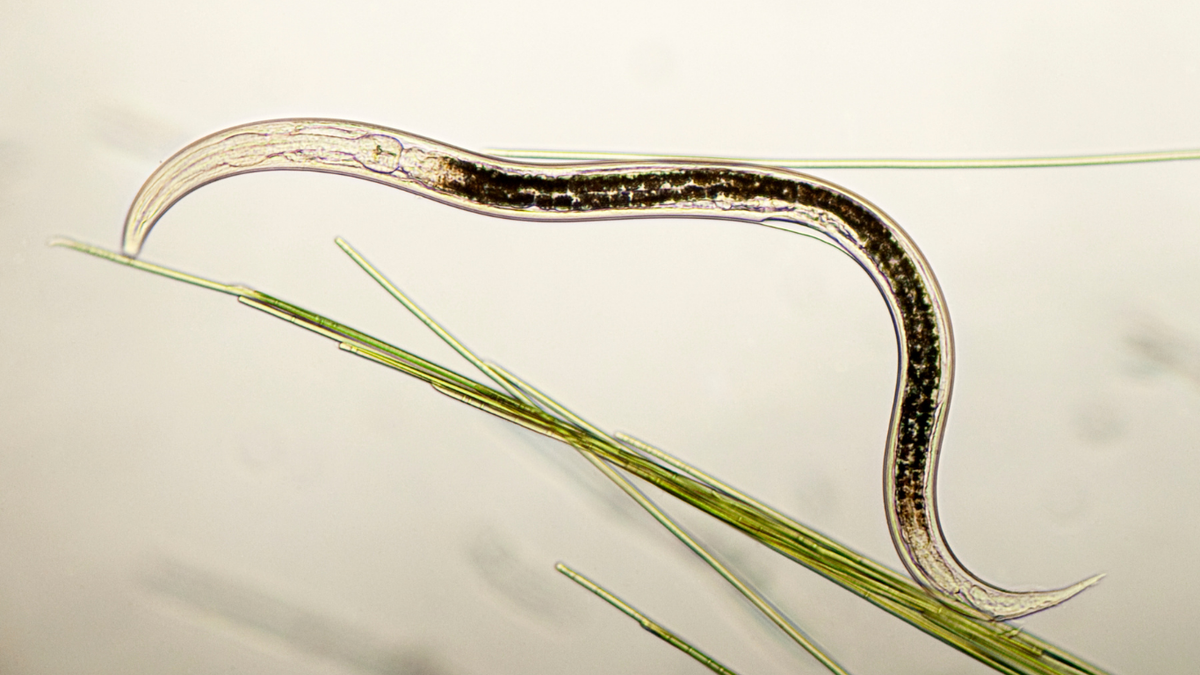
Nematodes are microscopic roundworms that biologically target and combat soil-dwelling pests such as fungus gnat larvae, vine weevils, or chafers.
Depending on the species, nematodes combat fungus gnat larvae, vine weevils, chafers, mole crickets, garden chafer larvae, ants, flea beetles, slugs, or crane fly larvae, among others.
No, nematodes are completely harmless to humans, pets, and plants. They are specialized in specific pests and cause no damage.
The nematodes actively penetrate the pest larvae and release bacteria that kill the pest. Afterwards, the nematodes reproduce inside the dead larva.
As a rule, the first effects show after about 5–7 days. Complete eradication takes up to 3 weeks, depending on the pest and the severity of the infestation.
Yes, nematodes can be used regularly in at-risk areas to prevent pests – especially in case of recurring problems with fungus gnats or chafers.
Nematodes prove to be more robust against heat than often assumed. Thanks to the secure shipping packaging, our SF nematodes can withstand uncooled shipping even during the summer months for up to a week without any problems. That is why we rely on environmentally friendly delivery without ice packs and unnecessary packaging waste.
The nematodes are delivered in an envelope directly to your mailbox. Even for orders containing other products, we ship our nematodes in a separate envelope. This ensures fast and safe delivery. For this reason, unfortunately, nematodes cannot be delivered to packing stations (Packstation).
Yes, ideally nematodes should be applied directly upon receipt. Storage in the refrigerator at 4–8 °C is possible for a few days (see packaging).
Our nematodes are enriched with a biological substrate that sometimes changes its shape during transport and due to temperature fluctuations. As a result, it may appear mushy or clumpy, but it is still completely normal and fully functional.
When you put the product in water and stir well, you will notice that everything dissolves properly and can be applied without any problems.
Live beneficial insects are excluded from exchange. However, we are happy to help you if you encounter any problems.
Shipping Information
- Fresh shipping: Orders from Monday to Thursday are shipped fresh daily.
- Weekend orders: Orders placed after Thursday 9 AM will be shipped the following Monday to guarantee the freshest beneficial insects.
The nematodes are mixed with water and applied to the infested areas using a watering can or spray system. The soil should be well moistened beforehand.
One application is usually sufficient. In case of heavy infestation or reappearance, a second application can be done after about 2 weeks.
Nematodes require soil temperatures between 12–25 °C and a consistently moist environment – at least for several hours after application.
Nematodes are suitable for use in flower pots, garden beds, lawns, and greenhouses – both indoors and outdoors.
After they have combated their host larvae, the nematodes gradually die off if no new pests are present.
Yes, nematodes can be combined with other beneficial insects such as predatory mites or parasitic wasps, as long as their habitats do not overlap.
Please contact us directly with a photo of the delivery and your order number.
Yes, each shipment includes instructions on how you can download them digitally from our website.
Yes, our nematodes can also be used for pest infestations on crops such as vegetables. They are completely harmless to humans and pose no health risk even if accidentally ingested.
No, our nematodes cannot be overdosed. They combat pests until no hosts are left and then die off on their own. The exact application amounts can be found in our digital instructions.
Yes, nematodes are a recognized method of biological pest control and are suitable for organic farming.
The clay powder or gel is harmless and can simply be spread in the garden or disposed of in household waste.


