






Number of beneficial insects and m²


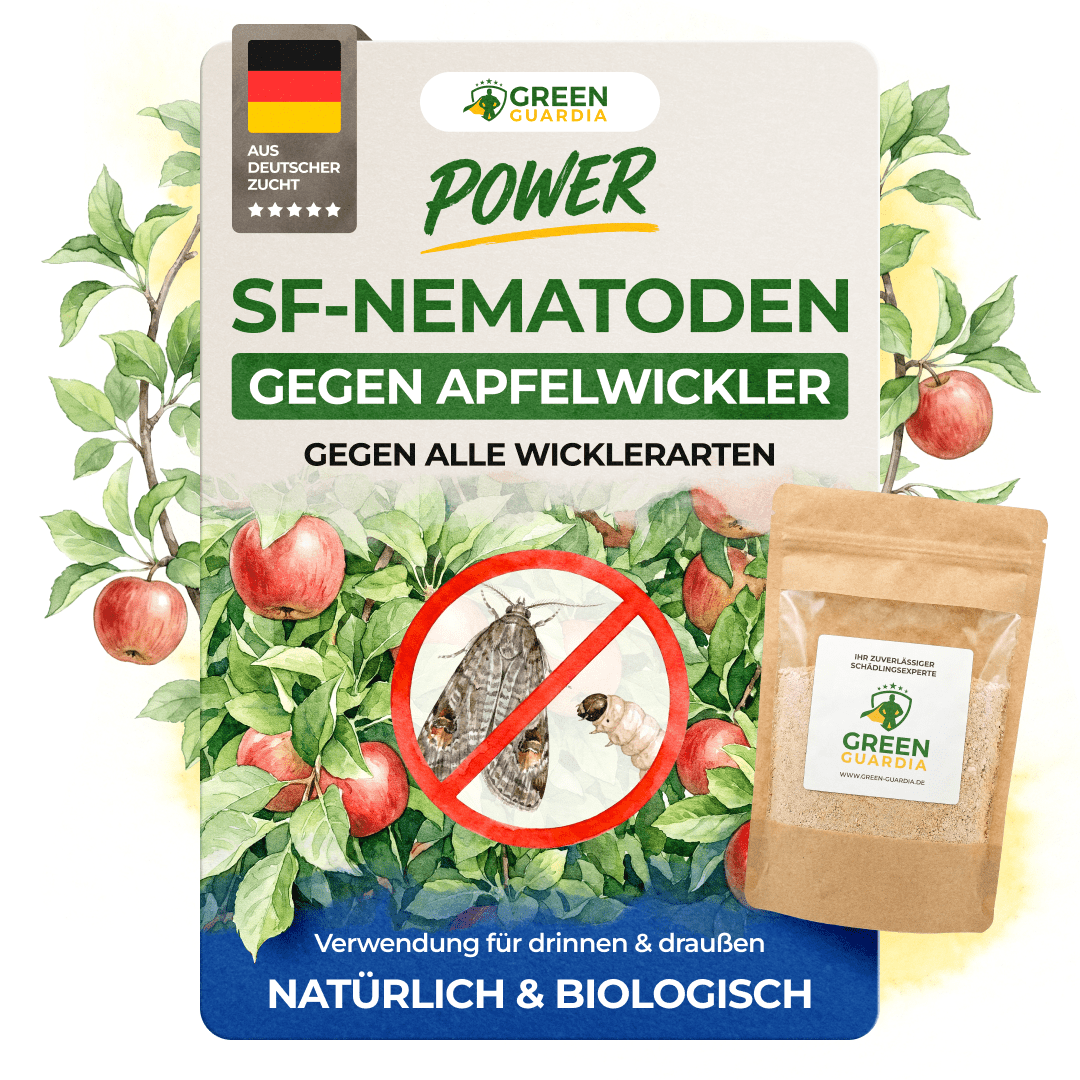
SF nematodes against codling moths
-
100% natural help against codling moth
-
From German breeding – delivered fast
-
Completely chemical-free – no residues
-
Discreet, effective & biologically sustainable
-
Safe for children & pets
Number of beneficial insects and m²
In stock - with you in 2-4 business days


What our customers say
-
Efficacy
hardly any effect partially effective highly effective -
Application
complicated some effort child's play -
Delivery Quality
not vital usable fresh & active
Choose delivery option & save cleverly:


Choose options
-
100% natural help against codling moth
-
From German breeding – delivered fast
-
Completely chemical-free – no residues
-
Discreet, effective & biologically sustainable
-
Safe for children & pets
Number of beneficial insects and m²
In stock - with you in 2-4 business days
Choose delivery option & save cleverly:
-
100% natural help against codling moth
-
From German breeding – delivered fast
-
Completely chemical-free – no residues
-
Discreet, effective & biologically sustainable
-
Safe for children & pets
Number of beneficial insects and m²
In stock - with you in 2-4 business days
Choose delivery option & save cleverly:
GREEN GUARDIA Nematodes for Codling Moth
SF nematodes for codling moth are microscopic roundworms of the species Steinernema feltiae. When applied to the soil under fruit trees with irrigation water, they actively penetrate the codling moth larvae in the soil and stop them from developing further. They are a biological alternative to chemical agents and are safe for humans, pets, and the environment.
Where the apple worm goes after leaving the apple
Boreholes in the skin and brown flesh around the core reveal that the codling moth has struck. Its larva, the well-known apple worm, eats its way through the fruit and seeds. Once finished, it leaves the apple and retreats into the soil to pupate. It survives the winter there, and the whole cycle starts over again next year. Simply picking up the fallen fruit won't stop the same thing from happening again next year.
When to best target codling moths with SF nematodes
Every fruit tree where a codling moth lays its eggs is affected, from individual apple trees in home gardens to orchards, or fruit trees in raised beds or pots. Apple and plum trees are hit particularly often. The larvae start retreating into the soil from July onwards, and that is exactly when your window of opportunity begins. Treatment is most effective in late summer and autumn after the fruit has fallen, provided the soil temperature is between 10 and 28 °C and there is no risk of frost.
Biological control against larvae in the soil
GREEN GUARDIA SF nematodes (Steinernema feltiae) are microscopic roundworms. You dissolve them in water and pour them around the trunk, roughly matching the diameter of the canopy. Or, in technical terms: on the tree basin. In damp soil, they actively search for codling moth larvae, penetrate them, and release bacteria that kill the pest. The nematodes are just as safe for bees and other beneficial insects as they are for humans and pets.
Buying and correctly dosing nematodes for codling moth
You order by area. We offer sizes from 2 million nematodes for 4 m² up to 50 million for 100 m². The nematodes are bred in Germany and shipped as a live product; there are specific shipping instructions for hot and cold days. Store them in a cool place at 4–8 °C upon delivery and apply them as soon as possible, ideally within a week. Because our range is organized by target pest, you will also find the perfect supplement for spring. Our parasitic wasps against codling moth target the eggs starting in mid-May, while the SF nematodes target the larvae in the soil starting in summer. This way, you biologically cover both ends of the life cycle.
When are SF nematodes the right choice?
SF nematodes are best used if you have found apples with boreholes or fallen fruit and want to catch the larvae before they overwinter in the soil. They are the right choice for apple and fruit trees in home gardens, orchards, or pots. Completely free of chemicals. They are most effective from July through autumn when soil temperatures are between 10 and 28 °C and the soil is consistently moist.
When are SF nematodes not the right solution?
SF nematodes will not save the apples currently on your tree, as they act on the larvae in the soil rather than inside the fruit. If you want to protect the harvest itself, start in spring with parasitic wasps against codling moth. You must not apply the nematodes during frost, and they cannot move through dry soil because they need moisture to travel. Chemical pesticides applied before or after use will harm the nematodes.
🍏 Conclusion: GREEN GUARDIA SF nematodes are the biological solution against overwintering codling moth larvae in the soil, particularly effective in late summer and autumn after fruit drop. Easy to apply with watering and safe for humans and pets.
No winter quarters for the apple worm. Order SF nematodes for codling moth now!
Apfelwickler natürlich bekämpfen – mit GREEN GUARDIA SF-Nematoden
Apfelwicklerlarven schädigen Obstbäume, indem sie sich durch Früchte und Kerne fressen – sichtbar an kleinen Bohrlöchern und braunem Fruchtfleisch. Mit GREEN GUARDIA SF-Nematoden bekämpfst du die Larven gezielt im Bodenstadium – biologisch, nachhaltig und ganz ohne Chemie.
Wie viele Nematoden brauche ich?
Wähle die passende Packungsgröße entsprechend deiner Fläche. So verteilen sich die Nematoden optimal im Boden und erreichen die verpuppenden Apfelwicklerlarven zuverlässig.
| Packungsgröße | Fläche | Anzahl Pflanzen | Wassermenge |
|---|---|---|---|
| 2 Mio. | 4 m² | 20 | 2 l |
| 3 Mio. | 6 m² | 30 | 3 l |
| 4 Mio. | 8 m² | 40 | 4 l |
| 5 Mio. | 10 m² | 50 | 5 l |
| 6 Mio. | 12 m² | 60 | 6 l |
| 10 Mio. | 20 m² | 100 | 10 l |
| 15 Mio. | 30 m² | 150 | 15 l |
| 20 Mio. | 40 m² | 200 | 20 l |
| 25 Mio. | 50 m² | 250 | 25 l |
| 50 Mio. | 100 m² | 500 | 50 l |
Anwendung in 3 einfachen Schritten
- Anmischen: Löse das SF-Nematodenpulver vollständig in der angegebenen Wassermenge auf.
- Ausbringen: Gieße die Lösung direkt auf die Baumscheiben bzw. unter die befallenen Obstbäume – besonders wirksam im Sommer, wenn sich die Larven in den Boden zurückziehen.
- Feuchtigkeit: Halte die behandelten Bereiche mindestens zwei Wochen gleichmäßig feucht – das ist entscheidend für den Erfolg.
Geeignete Einsatzbereiche
- Obstgärten: Besonders wirksam unter Apfel- und Pflaumenbäumen.
- Baumscheiben: Direkte Ausbringung im Wurzelbereich.
- Bio-Anbau: Rückstandsfrei & für ökologischen Gartenbau geeignet.
- Privatgärten & Streuobstwiesen: Auch für kleine Flächen ideal.
- Nach der Ernte: Optimaler Zeitpunkt für nachhaltige Wirkung.
🍏 Tipp: Wende die Nematoden frühzeitig ab Juli an – dann ziehen sich die Apfelwicklerlarven zur Verpuppung in den Boden zurück.
Was tun bei Apfelwickler im Obstgarten?
Der Apfelwickler (Cydia pomonella) zählt zu den häufigsten Schädlingen im heimischen Obstbau. Die Raupen dieses kleinen Falters bohren sich gezielt in Äpfel, Birnen oder Pflaumen und hinterlassen braune Fraßgänge im Fruchtfleisch – die Ernte ist oft nicht mehr genießbar.
Typische Anzeichen für einen Apfelwicklerbefall sind frühzeitig fallende Früchte, kleine Bohrlöcher an der Schale sowie braunes, krümeliges Kotmehl im Inneren der Frucht. Ein unerkannter Befall kann sich von Saison zu Saison deutlich verstärken.
Wie kann ich Apfelwickler natürlich und nachhaltig bekämpfen?
- Schlupfwespen einsetzen: Mit GREEN GUARDIA Schlupfwespen (Trichogramma sp.) parasitierst du gezielt die Eier des Apfelwicklers – ganz ohne Chemie und vollkommen rückstandsfrei.
- Frühzeitig ausbringen: Platziere die Trägerkärtchen bereits zur Eiablagezeit (ab Mai) direkt im Baum – ca. 1 Karte pro Baum oder alle 2–3 m.
- Befallene Früchte entfernen: Kontrolliere deine Bäume regelmäßig und entsorge befallene oder vorzeitig gefallene Früchte, um den Lebenszyklus zu unterbrechen.
- Auf Gift verzichten: Synthetische Spritzmittel schädigen auch Nützlinge – ihr Verzicht stärkt die biologische Kontrolle.
- Winterschnitt durchführen: Entferne abgestorbene Zweige und Fruchtmumien, um Überwinterungsplätze zu reduzieren.
- Leimringe nutzen: Diese helfen ergänzend gegen andere Schädlinge wie Frostspanner, ersetzen aber keine gezielte Wicklerbekämpfung.
🌿 Tipp: Eine 9-wöchige Behandlung mit GREEN GUARDIA Schlupfwespen deckt die gesamte Eiablagezeit ab und schützt deine Obstbäume zuverlässig – für gesunde Früchte ohne Rückstände.

GREEN GUARDIA vs. Other Providers
What sets us apart from the rest

|

|

Products for home, garden & pet-related areas |

Unclear product information |

Beneficial insects from German breeding |
Unclear origin information |

Developed for practical use |
Complicated selection |

Clear application instructions |
Few application instructions |

Freshly bottled or carefully packaged |
Longer storage or delivery times possible |

German Breeding
Beneficial insects from controlled German breeding – quality you can rely on

Expert Advice
Application tips and support from our experts – targeted and effective.

Fast Help
Our beneficial insects are ready for immediate use and provide targeted help for acute infestations at home or in the garden.

Natural & Safe
Safe in everyday life – use is completely risk-free for children, pets & plants.


Let our customers speak for themselves.
Natural Pest Control
At GREEN GUARDIA you will find the right natural solution for every pest problem – completely without chemicals.
Whether parasitic wasps against moths, predatory mites against spider mites, or nematodes against fungus gnats and slugs – our beneficial insects provide reliable help at home, in the garden, or in the greenhouse.
As a specialist in biological pest control, we stand for quality, innovation, and sustainable impact – in harmony with nature, humans, and animals.

Expert Advice – Personal & Practical
Our specialist advisors support you with targeted application tips and years of experience in natural pest control. Whether you have questions about application, combining different beneficial insects, or selecting the right product – we are happy to help you quickly and competently.
FAQ Nematodes
Do you have questions about our products, application, or shipping? Here you will find the most important answers at a glance. If anything remains unclear, feel free to contact us!
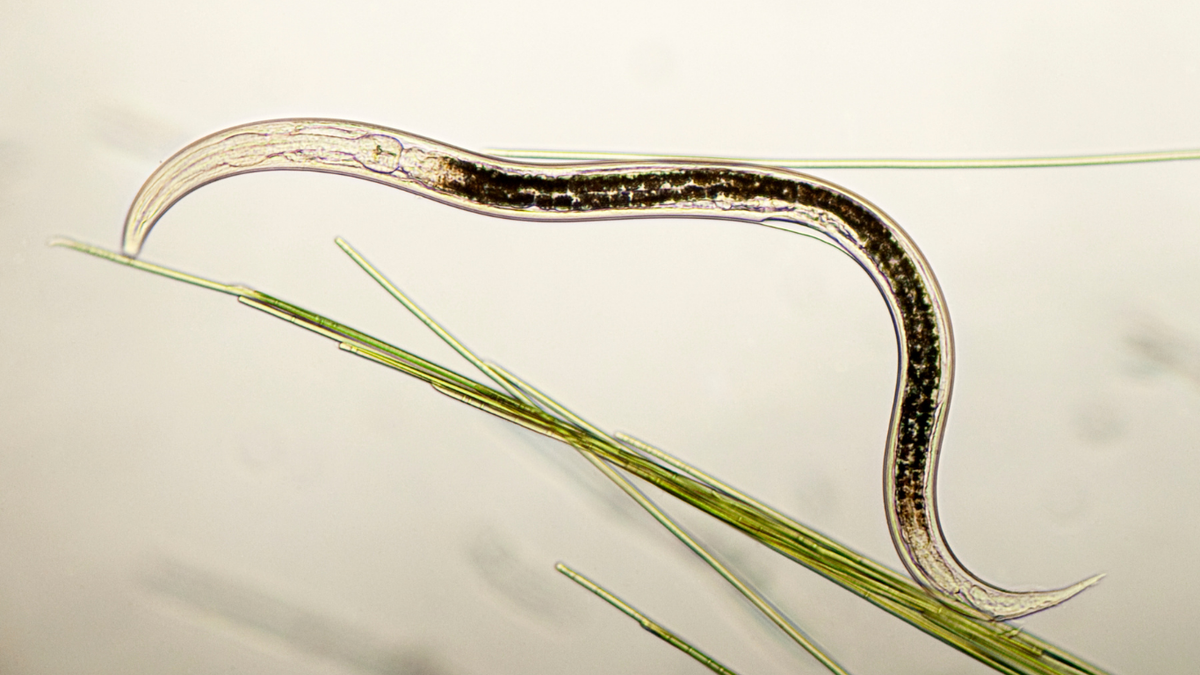
Nematodes are microscopic roundworms that specifically target and biologically control soil-dwelling pests such as fungus gnat larvae, vine weevils, or chafers.
Depending on the species, nematodes combat fungus gnat larvae, vine weevils, white grubs, mole crickets, garden chafer larvae, ants, flea beetles, slugs and snails, or crane fly larvae, among others.
No, nematodes are completely harmless to humans, pets, and plants. They specialize in specific pests and cause no damage.
The nematodes actively penetrate the pest larvae and release bacteria that kill the pest. Afterwards, the nematodes multiply inside the dead larva.
As a rule, the first effects are visible after about 5–7 days. Complete eradication takes up to 3 weeks, depending on the pest and the severity of the infestation.
Yes, nematodes can be used regularly in vulnerable areas to prevent pests – especially in the case of recurring problems with fungus gnats or white grubs.
Nematodes are much more robust against heat than is often assumed. Thanks to the secure shipping packaging, our SF nematodes can easily survive uncooled shipping during the summer months for up to a week without any problems. That is why we rely on eco-friendly delivery without cooling pads and unnecessary packaging waste.
The nematodes are delivered directly to your mailbox in an envelope. Even for orders containing other products, we ship our nematodes in a separate envelope. This ensures fast and secure delivery. For this reason, unfortunately, the nematodes cannot be delivered to packing stations (Packstation).
Yes, ideally nematodes should be applied immediately upon receipt. Storage in the refrigerator at 4–8 °C is possible for a few days (see packaging).
Our nematodes are enriched with a biological substrate that sometimes changes its shape during transport and due to temperature fluctuations. As a result, it may appear mushy or clumped, but this is completely normal and fully functional.
When you add the product to water and stir well, you will notice that everything dissolves nicely and can be applied without any problems.
Live beneficial organisms are excluded from exchange. However, we are happy to help you with any issues.
Shipping Information
- Fresh shipping: Orders from Monday to Thursday are shipped fresh daily.
- Weekend orders: Orders placed after Thursday 9 a.m. will be shipped the following Monday to guarantee the freshest beneficials.
The nematodes are mixed with water and applied to the infested areas using a watering can or a spray system. The soil should be thoroughly moistened beforehand.
One application is usually sufficient. In case of heavy infestation or re-appearance, a second application can be made after approx. 2 weeks.
Nematodes require soil temperatures between 12–25 °C and a consistently moist environment – at least for several hours after application.
Nematodes are suitable for use in flower pots, flower beds, on lawns, and in greenhouses – both indoors and outdoors.
After combating their host larvae, the nematodes slowly die off if no new pests are present.
Yes, nematodes can be combined with other beneficial organisms such as predatory mites or parasitic wasps, as long as their habitats do not overlap.
Please contact us directly with a photo of the delivery and your order number.
Yes, every shipment includes instructions on how you can download them digitally from our website.
Yes, our nematodes can also be used for pest infestations on crops such as vegetables. They are completely harmless to humans and pose no health risk even if ingested accidentally.
No, our nematodes cannot be overdosed. They combat pests until no hosts are left and then die off by themselves. The exact application amounts can be found in our digital instructions.
Yes, nematodes are a recognized means of biological pest control and are suitable for organic farming.
The clay powder or gel is harmless and can simply be spread in the garden or disposed of in household waste.


